Experiences, destinations and gear. Explore new places, discover what’s possible and live every adventure.
Where to snorkel in Rio de Janeiro (and when it’s worth it)
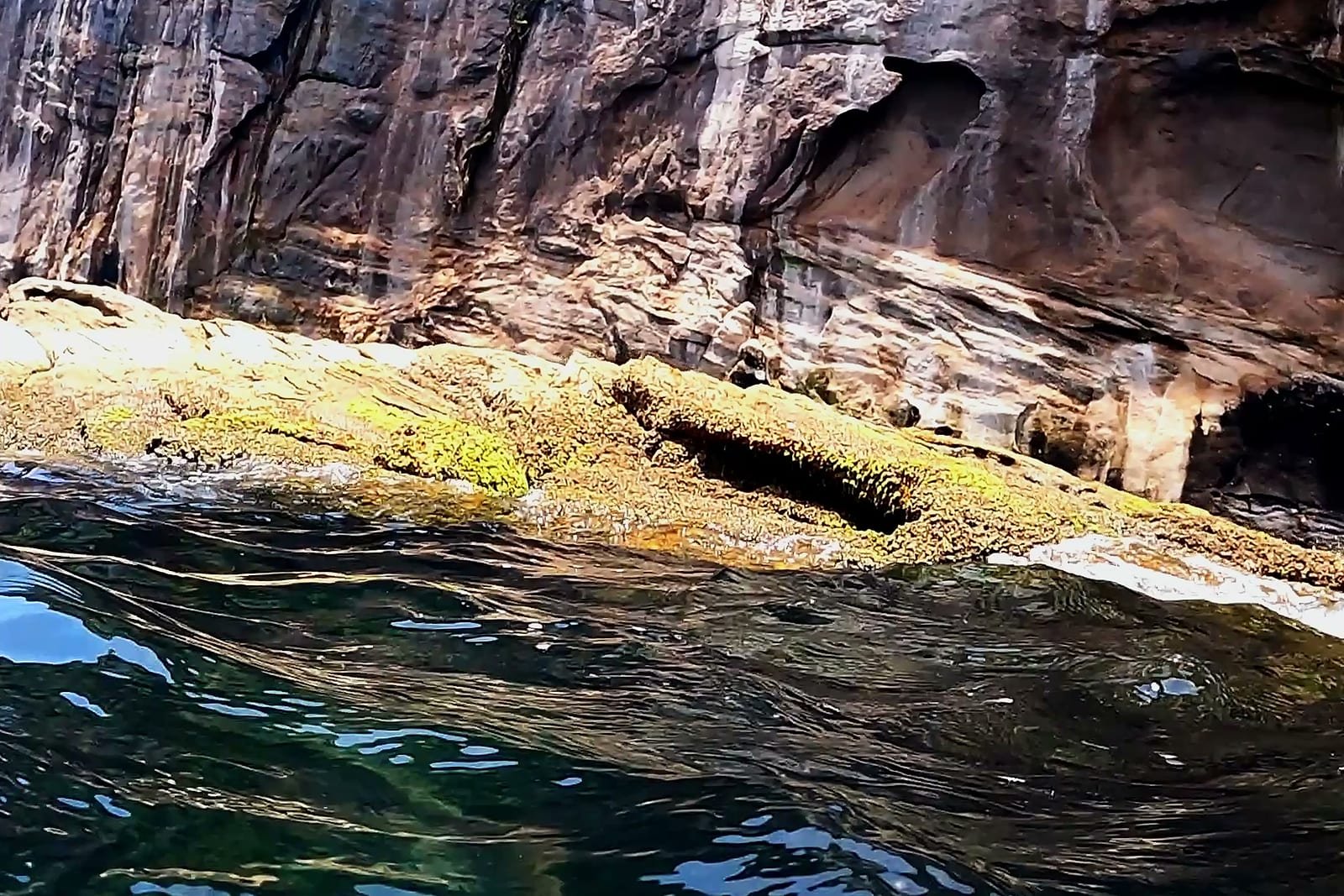
By Rogers.Explore, a team that lives Rio’s sea and trailsUpdated on
Quick answer: The best-organized snorkeling in Rio is at the Tijuca Islands, by boat from Barra da Tijuca: 4 hours, 9am to 1pm, with mask, snorkel and life jacket on board, from R$ 200 per person. Without a boat, try Praia Vermelha in Urca, along the side rocks, only on calm days with clear water. Either way, the sea decides: check wind, waves and water quality first, and never go in alone.
Saturday, 21 November, mid-morning. The boat cut its engine between two rock walls at the Tijuca Islands, the water went flat and blue, and someone pointed over the side: a sea turtle had come up to breathe a few meters away. Two minutes later it dove again, and half the boat already had masks on.
That’s the good part. The honest part is that snorkeling in Rio depends on the day: with wind, swell or heavy rain the day before, the same spot turns murky. Below you’ll find the places worth it, a side-by-side comparison, when not to go and how to get in the water safely, checked against our own tour conditions and official sources (the Brazilian Navy, INEA and ICMBio).
The spots, side by side
| Spot | How to get there | Time | Cost | Best for | Downside |
|---|---|---|---|---|---|
| Tijuca Islands (boat) | Boat from Barra da Tijuca | 4 h, 9am to 1pm | R$ 200 per person, shared tour | First-timers, with gear and crew | Open sea: with swell, the stop moves or the date changes |
| Praia Vermelha (Urca) | Walk in from the sand, next to Sugarloaf | 1 to 2 h | Free (bring your own gear) | Quick snorkel without a boat, on calm days | Turns murky easily; never enter from the rocks |
| Cagarras Islands | Boat from the South Zone | Varies | Varies | Seeing the archipelago up close | Protected area with its own rules; snorkeling not confirmed |
| Prainha, Grumari, Joatinga | Car or ride-hailing to the beach | Beach day | Free | Beach, surf and scenery | Open sea with waves: not a snorkel spot |
Verdict: for a first time, the Tijuca Islands by boat. You stop in sheltered water with mask, snorkel and life jacket on board, and the crew picks the calmest side of the islands that day. If you already have gear and want something quick and free, Praia Vermelha on a calm day does the job.
Tijuca Islands: best for your first time
The Tijuca Islands (Ilha do Meio, Alfavaca and Pontuda) sit in the sea off Barra da Tijuca, between Barra and São Conrado, and you can only get there by boat. The boat leaves through the Barra canal, passes the breakwater and, after a short ride, stops in sheltered water next to the rock. You climb down the ladder and float with the cliff on one side and the rocky bottom below.
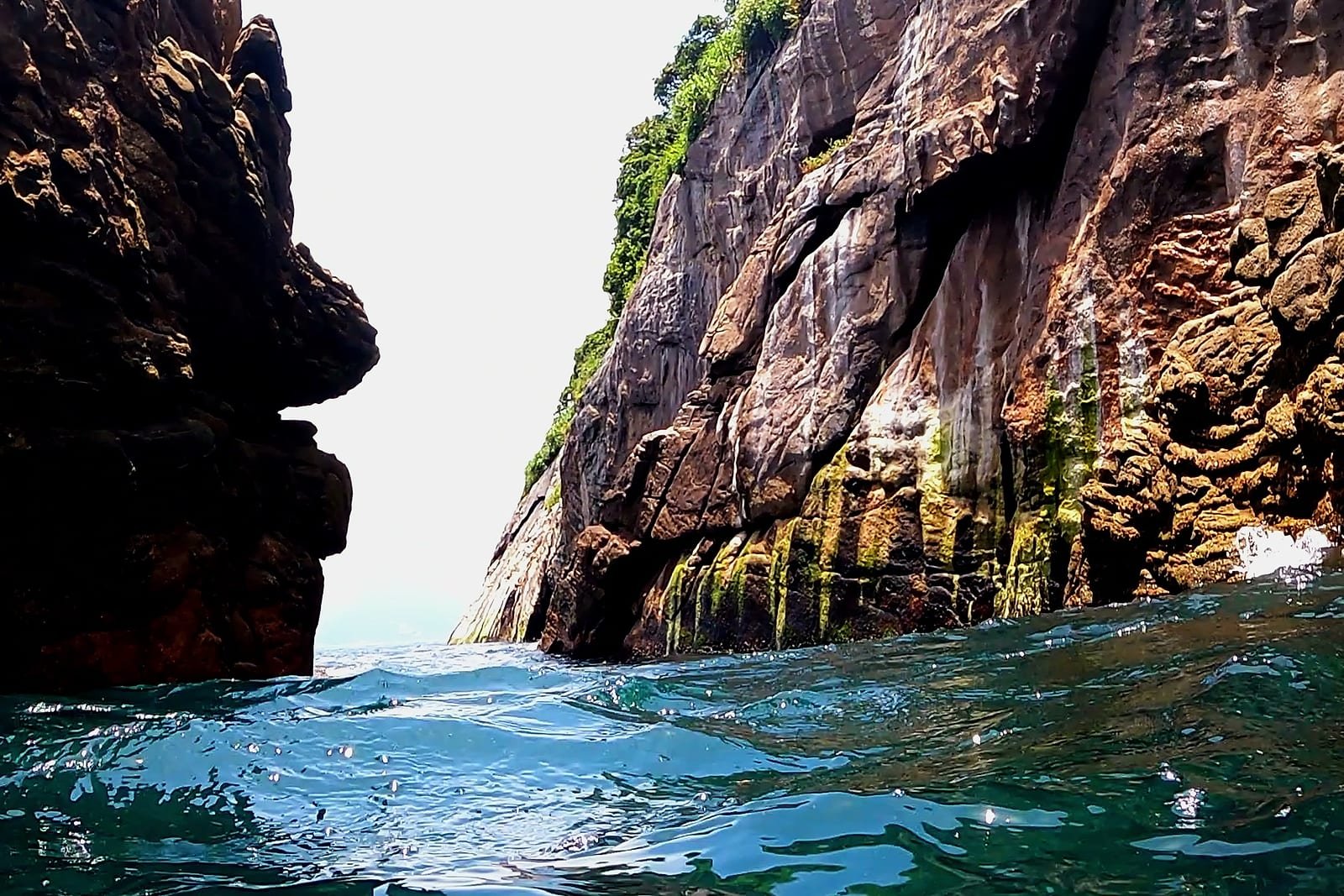
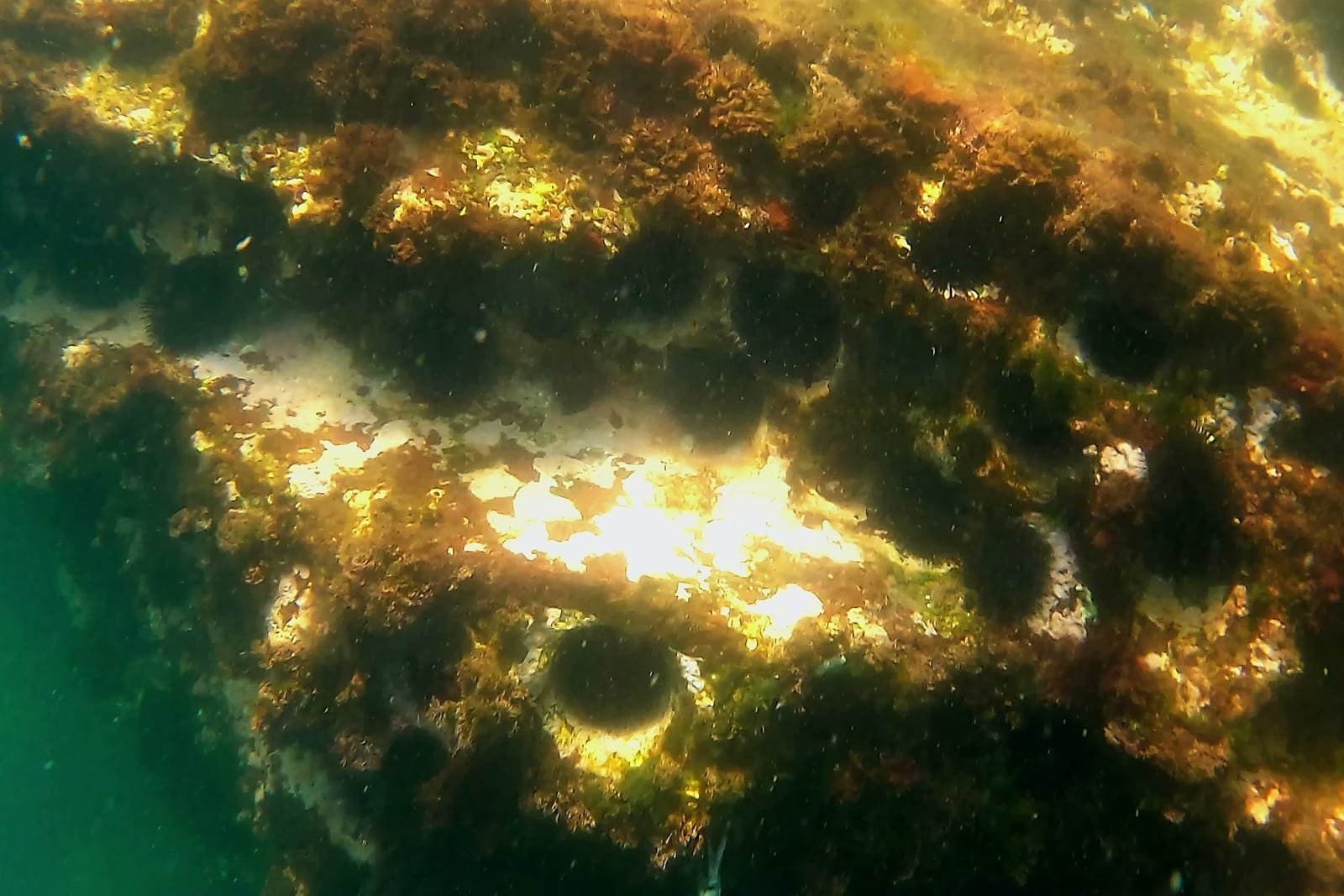
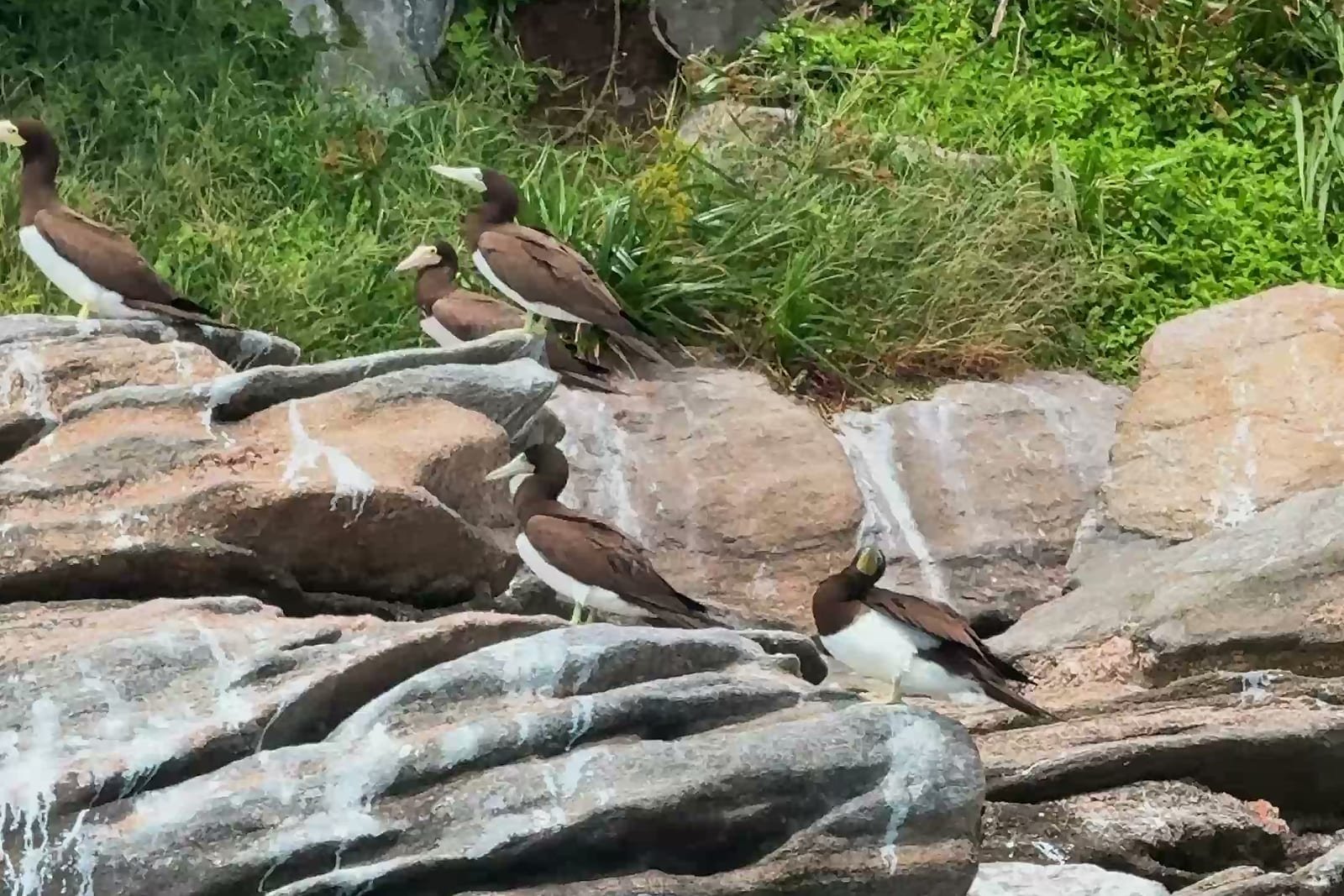
- What you see: algae-covered rock, sunlight in the water and, on clear days, fish swimming close to the rock. Brown boobies perch on the rocks above.
- Time and difficulty: you stay at the surface, no depth to deal with; weaker swimmers keep a life jacket on, close to the ladder.
- Pros: gear on board (mask, snorkel, life jacket, SUP and floating mat), soft drinks and snacks, and a crew watching the sea.
- Cons: it is open sea. With strong swell, the stop moves or the tour is rescheduled. No stop guarantees visibility or wildlife.
Getting to the pier: the Barra public pier is at Av. Ministro Ivan Lins, 16, in Jardim Oceânico. By metro, Line 4 ends at Jardim Oceânico station, in the same neighborhood; by car, there is public parking in front of Hotel Ibis Barra; by BRT, use the Jardim Oceânico terminal. The exact meeting point is confirmed when you book.
Cost: R$ 200 per person on the shared tour, which needs at least 6 people to depart. A private boat costs R$ 2,500 on weekdays (up to 10 people) or R$ 3,500 on weekends and holidays (up to 15). The sea forecast is checked 3 to 7 days ahead; if the sea doesn’t allow it, you pick a new date or get your money back. The hour-by-hour plan is in our Tijuca Islands boat tour guide.
Wildlife: watch from a distance
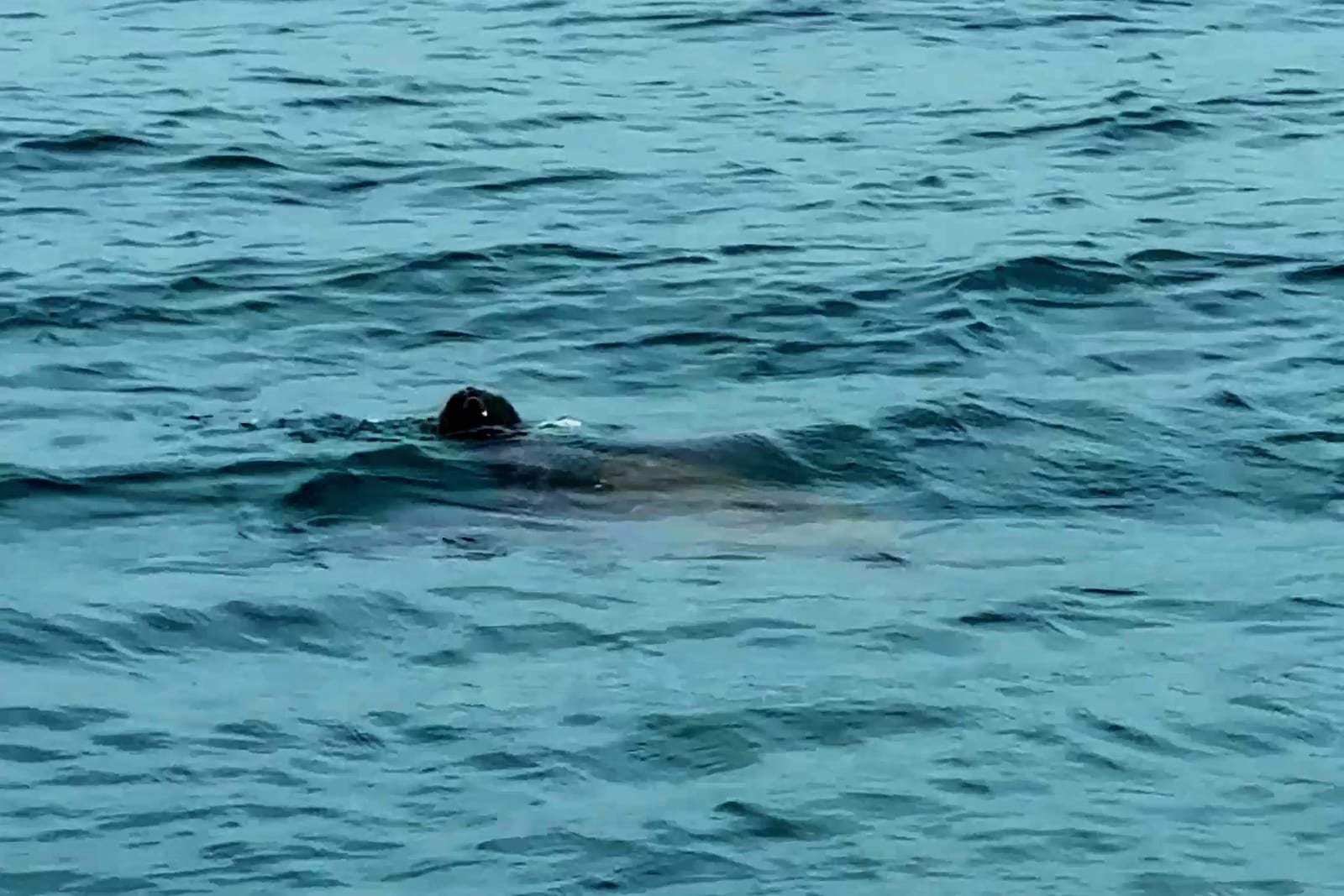
On 21 November, the turtle surfaced next to the boat and brown boobies were on the rocks. That was luck, not the itinerary: no tour can promise wildlife. If you see one, the rule is simple: don’t touch, don’t chase, and don’t hover over a turtle when it comes up to breathe. Projeto TAMAR, Brazil’s sea turtle program, explains why they need that space.
Praia Vermelha: best for a quick snorkel without a boat
Praia Vermelha is a small cove in Urca, next to the Sugarloaf cable car station, usually calmer than the open-sea beaches. The rocks on both sides attract fish, and on a flat, clear day you can snorkel near them, walking in from the sand.
- Getting there: metro to Botafogo, then bus or ride-hailing to Praça General Tibúrcio, right in front of the beach. By car, the lot near the cable car fills up early on weekends.
- Time and difficulty: one or two hours is enough. Stay close to the shore and the side rocks, not out in the middle of the cove.
- Pros: free, close to the South Zone and easy to pair with the Urca Hill hike (in Portuguese), which starts on the Cláudio Coutinho path right by the beach.
- Cons: the tip comes from local reports and the water turns murky easily. Gear rental is not guaranteed: bring your own.
Verdict: worth it if you already own a mask and the sea is flat. On a wavy day, swap the snorkel for the walk.
What about Cagarras, Prainha, Grumari and Joatinga?
- Cagarras Islands: the Cagarras Islands Natural Monument is protected by ICMBio, with its own visiting rules. We found no confirmation that recreational snorkeling is a standard tour there. Check with ICMBio and a certified operator before you go.
- Prainha, Grumari and Joatinga: beautiful, but open sea with frequent waves. We found no reliable source recommending them for snorkeling. Go for the beach instead: see Prainha and Grumari (in Portuguese).
When NOT to snorkel
- With a Navy storm or swell warning: the sea stirs up the bottom and the water goes murky. At the islands, the tour is suspended and rescheduled.
- Up to a day or two after heavy rain: water near the coast can turn murky or even unsafe for swimming. Check the INEA water quality bulletin.
- With strong wind: the surface gets choppy, your mask fills with water and you tire quickly.
- Alone, or unable to swim without a life jacket: never. Snorkeling is a buddy activity.
- Near boat or jet ski traffic, unless it’s your own anchored boat and the crew knows where you are.
Before you get in
- Check the Navy forecast for wind and waves, and look at the sea on site. Choppy sea means murky water and more risk.
- Check water quality with INEA, especially after rain.
- Agree on a signal and a meeting point with your buddy, and keep an eye on each other.
- Life jacket if you’re not confident in the water. No shame in it: it’s what lets you relax and enjoy.
- Don’t touch or take anything from the sea: no rocks, no animals. It protects the place and saves you from cuts and stings.
- Water-resistant sunscreen and a UV shirt: when snorkeling, your back faces the sun the whole time.
The right gear
A mask that seals well matters more than anything. Test it at home: press it to your face without the strap and breathe in through your nose; if it sticks on its own, it fits. In the water, tighten the strap just enough; if water gets in, get out and adjust. A UV shirt protects your back and water shoes help on rocks and hot sand.
Pair it with
The boat is back at 1pm, so you have the afternoon free in Barra: cross to Gigóia Island or follow our things to do in Barra da Tijuca. Want adrenaline on the same sea? Compare in jet ski or boat tour in Rio.
Read next
- Tijuca Islands boat tour: routes, prices and how to get there
- What to bring on a boat tour in Rio
- Things to do in Barra da Tijuca beyond the beach
- Why a morning at sea feels so good: what science says
FAQ
What is the best place to snorkel in Rio?
For a first time, the Tijuca Islands by boat from Barra da Tijuca: you stop in sheltered water by the rocks, with gear and crew. Without a boat, Praia Vermelha in Urca works on calm days, along the side rocks.
Do I need to know how to swim?
It is much safer if you can swim a little. If you are not confident in the water, wear a life jacket, stay close to the boat or the shore and always with someone. On the boat tour, mention it when you book.
Is snorkeling the same as scuba diving?
No. Snorkeling happens at the surface, breathing through the tube and looking down. Scuba diving with a tank requires a course and a certified operator.
Do I need to bring a mask on the boat tour?
No. Mask, snorkel and life jacket are on board. Bring your own only if you prefer one that fits you perfectly.
Can you see sea turtles snorkeling in Rio?
Sometimes. On our 21 Nov 2026 trip a sea turtle came up to breathe next to the boat at the Tijuca Islands, but wildlife is never guaranteed. If you see one, keep your distance: don’t touch it or chase it.
When is the best time of year to snorkel in Rio?
Summer brings warmer water and long days, but the day matters more: a morning without strong wind, swell or heavy rain the day before usually has clearer water.
Can I snorkel at the Cagarras Islands?
The Cagarras are a Natural Monument protected by ICMBio, with their own rules. We found no confirmation that recreational snorkeling is a standard tour there: check with ICMBio and a certified operator first.
Sources
- Rogers.Explore boat tour: route, times and conditions (Tijuca Islands)
- Brazilian Navy: marine weather forecast and storm warnings
- INEA (Rio de Janeiro state environment agency): beach water quality bulletins
- ICMBio: Cagarras Islands Natural Monument
- Projeto TAMAR: sea turtles in Brazil
- Praia Vermelha: things to do (local reference, in Portuguese)
Safety first: Outdoor and sea activities depend on the weather and the conditions of the day. Respect your limits, use safety gear and check local rules before you go.
Follow Rogers.Explore
Places, tips and behind the scenes of adventures in Rio, right on my social media.
Keep exploring Rio
 Is walking on sand harder? Why, and how to make the most of it
 First time on a jet ski in Rio: how it works and what to bring
Transparência: alguns links desta página são de afiliado (Shopee, Amazon e Mercado Livre). Se você comprar por eles, o Rogers.Explore recebe uma pequena comissão, sem custo extra para você.